
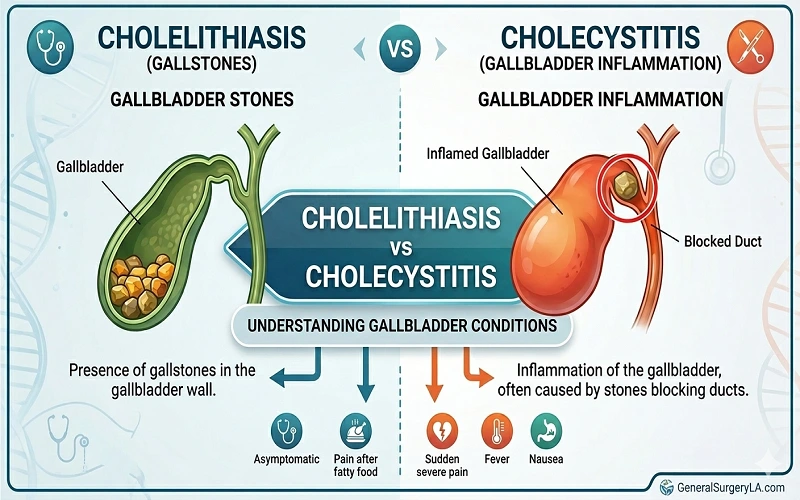
When caring for patients with upper abdominal pain, it is important to distinguish between cholelithiasis and cholecystitis. Cholelithiasis means there are gallbladder stones, which often cause no symptoms for years. Cholecystitis, on the other hand, is inflammation or infection of the gallbladder wall and may need urgent treatment. If cholelithiasis develops into cholecystitis, the situation can change from manageable to a possible surgical emergency.
Table of Contents
The Fundamentals of Cholelithiasis: The “Silent” Stones
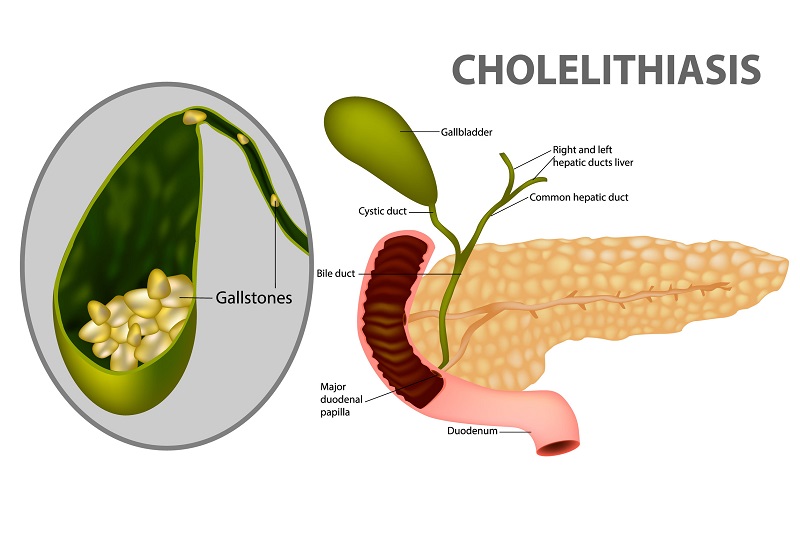
Cholelithiasis is the medical term for gallstones. These are hardened deposits of digestive fluid that can form in your gallbladder. They range in size from as small as a grain of sand to as large as a golf ball.
Most people with cholelithiasis do not even know they have them. These are often called “silent stones” and do not require treatment unless they begin to cause symptoms. However, when a stone moves and temporarily blocks the cystic duct, it can lead to intense pain. Understanding the risk factors and symptoms of Cholelithiasis vs Cholecystitis helps patients identify when a chronic issue has become an acute crisis.
Why Do Gallstones Form?
The gallbladder’s primary job is to store bile produced by the liver. Gallstones typically form when:
- Too much cholesterol in your bile: If the liver excretes more cholesterol than the bile can dissolve, the excess may crystallize into stones.
- Too much bilirubin in your bile: Conditions like liver cirrhosis or certain blood disorders can cause the liver to produce too much bilirubin.
- The gallbladder doesn’t empty correctly: If bile becomes too concentrated, it can lead to stone formation.
Transitioning to Cholecystitis: When Inflammation Sets In
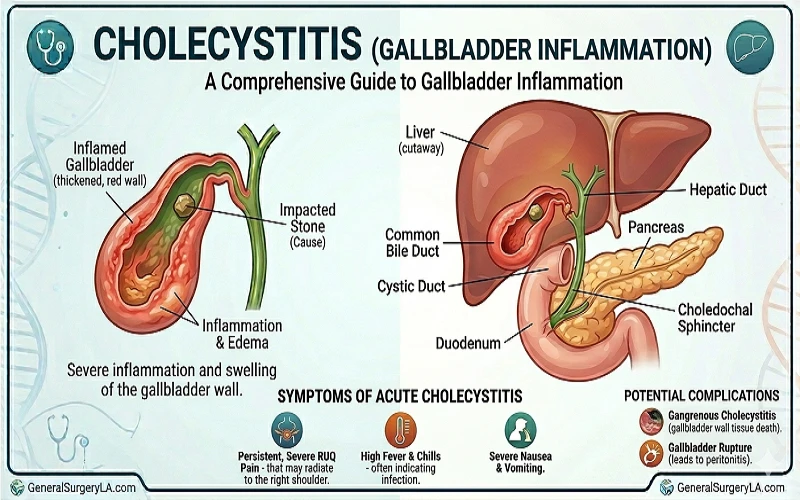
90 percent of cholecystitis cases occur due to obstruction of the cystic duct by a gallstone. If the cystic duct becomes obstructed, then bile becomes concentrated and inflamed. This can cause a secondary infection.
While kidney stones cause sudden, intense pain, cholecystitis brings about constant and severe pain that may radiate to the right shoulder or back region. In the diagnostic process of Cholelithiasis vs Cholecystitis, a physician looks for involvement of the body in the form of fever, elevated white blood cell count, and thepresence of Murphy’s sign – pain worsens when pressure is exerted over the gallbladder region with inhalation.
Acute vs. Chronic Cholecystitis
- Acute Cholecystitis: A sudden, severe inflammation requiring hospitalization and often surgery (cholecystectomy).
- Chronic Cholecystitis: Resulting from repeated bouts of minor inflammation, leading to a shrunken, scarred, and non-functional gallbladder.
Comparing the Two Conditions
To simplify the clinical differences, the following table outlines the key distinctions that surgeons use during a physical exam and imaging.
Clinical Comparison Table
| Feature | Cholelithiasis (Gallstones) | Cholecystitis (Inflammation) |
|---|---|---|
| Primary Issue | Presence of hardened bile deposits | Infection/Inflammation of the wall |
| Pain Duration | Minutes to a few hours (colicky) | Persistent (usually >6 hours) |
| Fever/Chills | Absent | Frequently Present |
| Nausea/Vomiting | Occasional | Very Common |
| Diagnosis | Ultrasound (shows stones) | Ultrasound (shows wall thickening) |
| Typical Treatment | Observation or elective surgery | Hospitalization and urgent surgery |
The Role of Biliary Colic
It is important for patients to understand that there is an intermediate stage between these two conditions. Clinicians must often differentiate between the temporary discomfort of Biliary Colic vs Cholecystitis to determine if the patient can be managed at home or needs to be admitted for surgery. Biliary colic occurs when a stone intermittently blocks the duct but eventually moves, allowing the pain to subside, whereas cholecystitis is a permanent blockage leading to tissue damage.
Diagnostic Imaging and Labs
When evaluating Cholelithiasis vs. Cholecystitis, the gold standard for diagnosis is a Right Upper Quadrant (RUQ) Ultrasound.
- In cases of stones, the ultrasound will show mobile, echogenic structures with shadowing.
- In cases of inflammation, the ultrasound will show “pericholecystic fluid” (fluid around the gallbladder) and a thickened gallbladder wall (usually >3mm).
In some cases, a HIDA scan (cholescintigraphy) may be used if the ultrasound is inconclusive. This nuclear medicine test tracks the flow of bile and can definitively show if the cystic duct is blocked.
Risk Factors For Cholelithiasis vs Cholecystitis
The “Five F’s” have long been used in medical schools to identify those at the highest risk for gallbladder issues:
- Female: Estrogen increases cholesterol secretion into bile.
- Fat (Overweight): Obesity is a major risk factor for stone production.
- Forty: Prevalence increases with age, particularly after 40.
- Fertile: Pregnancy-related hormonal changes slow gallbladder emptying.
- Fair: Historically noted in certain ethnicities, though it affects all populations.
Furthermore, for patients on a weight loss journey, rapid weight loss—often seen after bariatric surgery or using medications like Wegovy- can increase the risk of stones. This makes the monitoring of Cholelithiasis vs Cholecystitis particularly important for post-surgical patients.
Treatment Options
If you are diagnosed with symptomatic gallstones or inflammation, the most common treatment is a Laparoscopic Cholecystectomy.
- For Cholelithiasis: Surgery is usually elective. If the stones aren’t causing pain, a “wait and see” approach is often taken.
- For Cholecystitis: This is considered an urgent situation. Patients are typically given IV fluids and antibiotics to control the infection before the gallbladder is removed, usually within 24 to 48 hours of admission.
Final Verdict: Cholelithiasis vs Cholecystitis Management
If you are seeking specialized care, Dr. Babak Moein is a premier general and cosmetic surgeon in Los Angeles, renowned for his surgical precision and decades of experience in performing advanced laparoscopic procedures. His patient-first approach ensures that, whether you are managing silent gallstones or facing an acute inflammatory crisis, you receive the highest level of clinical expertise.
To discuss your symptoms or schedule a consultation, please contact us through the following options:
- Call directly: (310) 861 4093
- Online Inquiry: Contact Us
- Insurance Information: Check General Surgery Insurance
Schedule Your General Surgery Consultation Today
Don't wait to address your surgical needs. Contact us today to schedule a consultation with Dr. Moein and learn about your treatment options.
We're here to provide expert surgical care with compassion and excellence, helping you get back to your best health as quickly as possible.
Book Your Consultation
Ready to discuss your surgical options? Contact us today.